

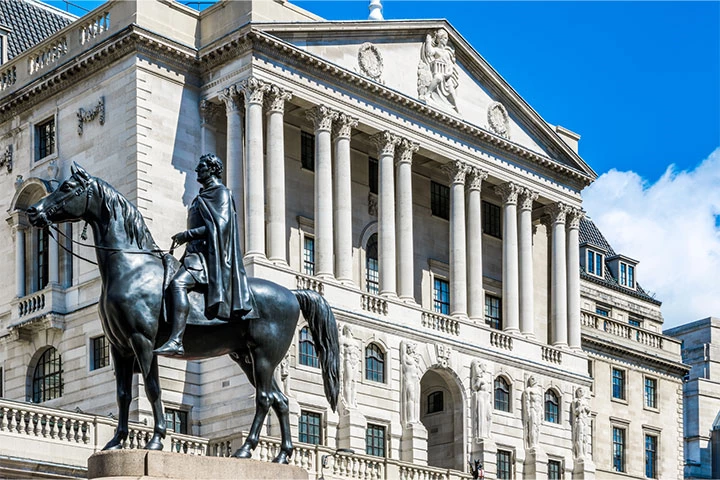
The Bank of England kept its Bank Rate unchanged at 3.75% in their latest meeting, with a narrow 5 to 4 vote, as policymakers balanced easing inflation pressures against risks from a weakening economy. Four members supported a 25-basis point cut, highlighting growing divisions within the Monetary Policy Committee. Inflation remains above the 2% target but is expected to fall back to around that level from April due partly to energy price developments. Pay growth and services inflation have continued to ease, reflecting subdued economic growth and rising slack in the labour market. Policymakers noted that risks of persistent inflation have diminished, while weaker demand and a softening jobs market pose downside risks. Bank Rate has already been reduced by 150 basis points since August 2024, lowering policy restrictiveness.
Fragile with a hint of potential
The year has started with mixed and volatile data, so it's unclear how much underlying momentum in the economy has improved. Measures of business activity reported a sharp rebound in activity in January, most notably across services firms. However, consumer confidence ticked only 1pt higher, as improved confidence in personal finances was offset by lower expectations of the economy for this year. Those dynamics left consumers to continue to prefer saving. Elsewhere, there were signs that demand conditions are, at least, stabilising, house prices rose 0.3% m-o-m and manufacturers reported the fastest pace of new order growth since May 2022.
While the outlook is a fragile one, there is scope for a more marked improvement in demand. But we need to see a stable policy environment and a more sustained improvement in confidence to support underlying growth.
Bank of England hints at further rate cuts
Governor Andrew Bailey, who voted for unchanged rates this month, will be key in determining the timing of the next cut, given his relatively middle ground stance. Mr Bailey suggested that he needed to see a further falls in inflation expectations alongside the expected moderation in the current inflation rate. That would help to further alleviate concerns of upside risks to inflation over the medium term. It is widely expected that the CPI inflation rate will fall to around 2% in April 2026.
Then there is the question of how many more rate cuts are in prospect, and where Bank Rate may settle. That will be determined by how restrictive the Committee currently views interest rates to be on economic growth and inflation and whether any restrictiveness should remain in place for a more prolonged period. The latest BoE forecasts point to lower inflation, relative to its November forecast, and while the upside risks to inflation are judged to have diminished, they remain a source of uncertainty. Ultimately, after six rate cuts since August 2024, and with Bank Rate closer to its 'neutral' level, decisions on further rate cuts are likely to be finely balanced.